

Ep. 18 | Islam in North America | Dr. Hussein Rashid

In this episode, Dr. Hussein Rashid talks about his recently published volume, Islam in North America: An Introduction (Bloomsbury, 2024), which he co-edited with Huma Mohibullah and Vincent Biondo. Hussein discusses his trajectory as a scholar and how beginning his academic career in the post-9/11 world led him to believe in the importance of public-facing and accessible scholarship. The chapters of the book cover a wide range of topics related to Islam in the United States, Canada, Mexico, and Caribbean and explore themes of race, gender, class, and sexuality, among others. Hussein sheds light on the long and little-known history of Muslims in North America, the changing perception of Muslims in the American imagination, and how Islamophobia/anti-Muslim bias and the racialization of Muslims manifest in the past and present.
Dr. Hussein Rashid is a scholar of Islam whose research focuses on Muslims and American popular culture. Hussein earned his PhD in Near Eastern Languages and Civilizations, focusing on South and Central Asia, at Harvard and has since taught at many universities. Hussein writes and speaks about music, comics, movies, and the blogistan.
Episode 18
Release date: February 25, 2025
Hosts: Harry Bastermajian and Meryum Kazmi
Recording location: Media Production Center, Harvard University
Sound engineer: Jeffrey Valade
Audio editing: Meryum Kazmi
Audio elements (used with permission of the artist): "I Wish" by Omar Offendum (Prod. by Saüd)
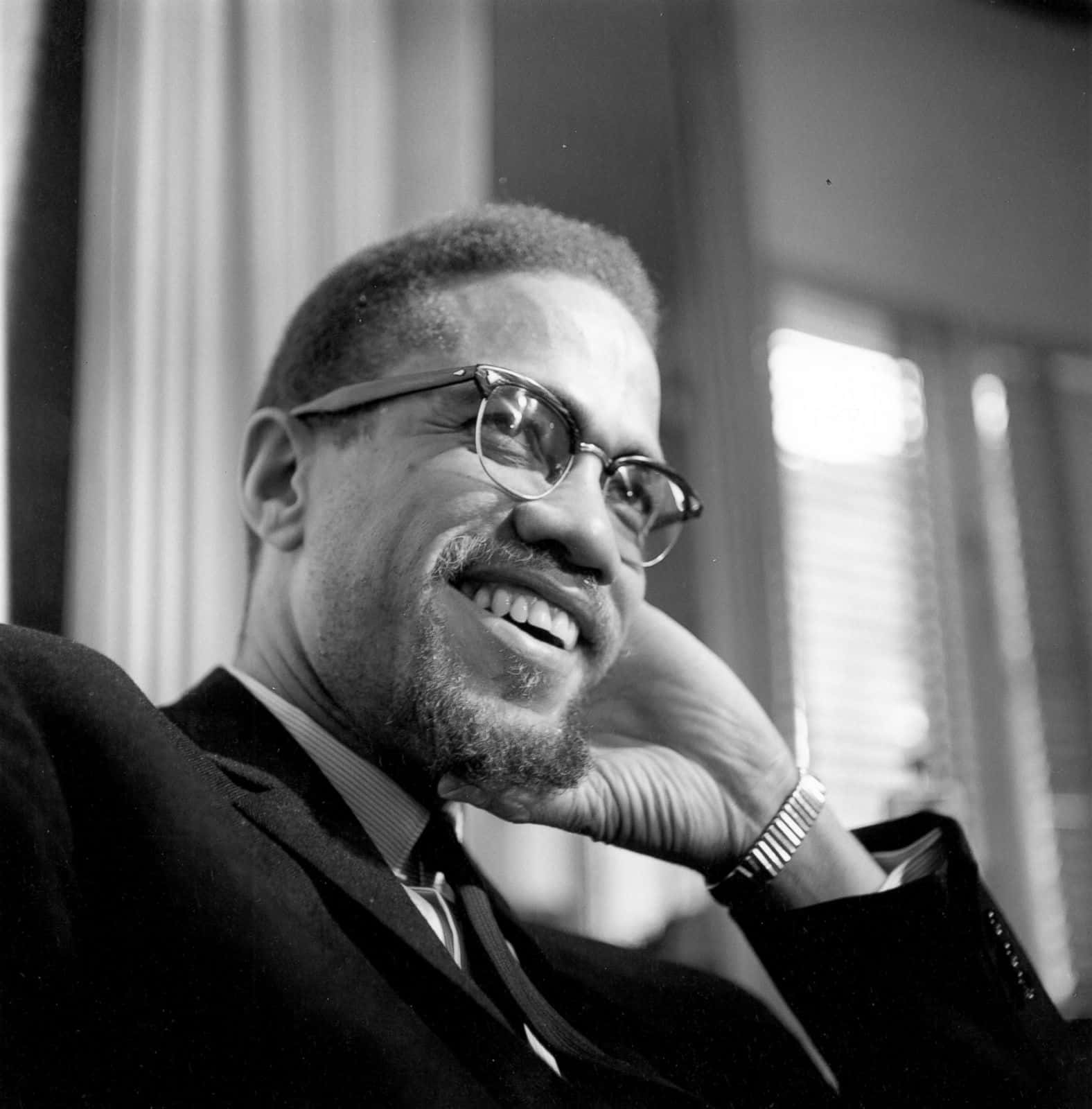
Photo: Malcolm X smiling portrait via Wallpapers.com
Transcription: Otter (modified for readability)
[Opening] “I Wish” by Omar Offendum
Harry Bastermajian 00:13
Hello and welcome to the Harvard Islamica Podcast. I'm Harry Bastermajian,
Meryum Kazmi 00:17
and I'm Meryum Kazmi. We're excited to have as our guest today, Dr. Hussein Rashid, a scholar of Islam whose research focuses on Muslims and American popular culture. Hussain received his PhD in Near Eastern Languages and Civilizations, focusing on South and Central Asia at Harvard and has since taught at many universities. Hussein writes and speaks about music, comics, movies and the blogistan. Our conversation today will be about Hussein's recent publication, Islam in North America: An Introduction, a volume he co-edited with Huma Mohibullah and Vincent Biondo. Welcome, Hussein.
Hussein Rashid 00:52
Thank you Meryum. Thank you Harry, for having me on the podcast.
Harry Bastermajian 00:55
Yeah, of course, it's great to have you here. To get us started, can you tell us a little bit more about your professional background, and what led you to publish this volume?
Hussein Rashid 01:06
Yeah, I think for me, I'm not a traditional academic, in the sense that I didn't go from graduate school straight into a tenure-track job and sort of move on with an academic career. I came out of an intellectual positioning as an undergraduate, I was at Columbia College in New York City, where I had the privilege of taking a couple of courses with the late great Edward Said, and one of his books that he never taught, but I read and really had a profound influence on me and helped me understand what I thought I wanted to do with my degree, with my academic degree, was a book he called, called Representations of the Intellectual where he talks about the distinction-- I'm really oversimplifying this for those of your listeners who may be familiar with it-- but recognize we have a limited amount of time here, that when he talks about the idea of academia as a way to reproduce structures of power, and the intellectual is taking learning and education as a way to disrupt and challenge structures of power. I was working on my PhD, I'd actually just finished my generals or qualifying exams, depending what school you're in, but here at Harvard, we call them the general exams, just before September 11, 2001 and so I really found my voice as somebody engaged with broader publics in that space, an American-born Muslim, which is surprising, not as unusual as most Islamophobes would have you think, but born and bred in New York, which was obviously an important part of the narrative, working on a Harvard PhD in Islamic studies. So it was really a confluence of events that led me to work with community organizations, churches, synagogues, interfaith communities, political organizations. I had the privilege of working on Howard Dean's presidential campaign briefly, before moving over to, at the time, Senator John Kerry's presidential campaign briefly, and really sort of working in that space. So a lot of the work that I've done is really this type of public education, public engagement, in terms of thinking about religion broadly, in Islam specifically. So long answer to a short question, but it then brought me, a lot of my academic publishing has really been the idea that I'm not writing for tenure as tenure begins to die, because I'm not writing for the guild, I'm writing for public purposes. I'm writing to change public understandings of religion. And so the style I prefer to write, and I don't think they're, I don't think it's intellectually weak, but I think it's much more accessible, and that's really what I'm aiming for, and those are the people I try to work with. And that led to this volume on Islam in North America, to really think about who are some interesting people doing work on Muslims in America that's not being covered elsewhere. And I'm really grateful for colleagues and mentors like Edward Curtis and Kecia Ali and Laury Silvers, who've really just done a lot to help create the space and create that ecosystem where we can have these conversations that are academically rigorous but are not guild focused.
And, when we put this volume together, it was reaching out to colleagues and friends, because it'll make the writing process easier. But we also have these intellectual commitments, not just in terms of shared questions or shared grounding conversational pieces that we could see interlocking. But our authors, we didn't want to create a volume where people were being extractive in their relationship to community, that they had to have, the authors had to have, some ongoing relationship with the communities about which they were writing, and it was really important for us that we didn't recreate those systems of academia where it's like drop in, let me observe you. Thank you. Goodbye. But how does this help build up those communities, right? If we are talking about not doing traditional academia, but doing the work of an intellectual, rather than simply writing for The guild, rather than simply getting promoted within the guild, but saying that education is meant to be a liberatory process. How do we take the communities we're engaging with on that journey with us? So it's not the solo act, and that's one of the ways we were trying, philosophically, to try to disrupt these capitalist and white supremacist systems that say there can only be one, and really try to say, No, it's all of us or none of us.
Harry Bastermajian 05:39
Thank you.
Meryum Kazmi 05:40
So the topics in this book are far ranging from North American Muslim geography to Islamophobia as racism to Sufism in Mexico, some examples. How did you decide what themes to include being, as you said, expansive but not comprehensive.
Hussein Rashid 05:56
So here, I really want to thank our editor at Bloomsbury, Lalle Pursglove, who actually came to me and suggested this volume. They were working on-- this series is actually part of a series on Bloomsbury academic on religions in North America. So they really saw North America as being the entire North American continent, so the Caribbean, Mexico, the United States, Canada. And so that really helped shape the types of people we reached out to: people who are thinking transnationally, people who are thinking comparatively. So that helped shape the volume a little bit. So you mentioned our chapter on Sufism in Mexico, which was a surprise. It was a scholar I met through the call for this volume who's writing about somebody briefly, who was very important to my own personal and professional development, Shaykh Noor Lex Hixon, who started the Sufi community, this particular Sufi community that Luciana is writing about in the volume in Mexico. So that was really sort of the idea. Who's writing about this space, who's writing about it, comparatively, in really interesting ways, and what are some of the things that we think would be surprising for a public audience? Again, I'm going to focus a little bit of my own work, but you'll see my colleague Huma has also done some public work in this space, but I'd done a New York Times op-doc on the history of Muslims in America. I just came out, or worked on a recently released PBS Digital series on the history of Muslims in America. I've worked on museum exhibitions. So you know, through all those sorts of public engagements and like where these become repositories of knowledge. What's the gaps in these repositories of knowledge? So those became the two constraints. What does the press need? What are they suggesting? Who's available to write into those spaces? And what am I thinking of is something I haven't done that I want to learn? For me, all these engagements are places to learn for me as well. And that really just helped shaped an expansive vision of what this could be, knowing full well, we couldn't be comprehensive, so we leaned hard into the fact that we could not tell a linear story, and we wanted there to be big, obvious gaps so people could say, and what about, and what about, and what about? Yeah, and what about? Let's fill in those gaps, rather than saying we're trying to do everything all at once.
Harry Bastermajian 08:09
To familiarize our audience with a little bit more of the history of Muslims in America. Can you tell us a little bit about the main patterns of arrival of Muslims in North America?
Hussein Rashid 08:24
So, you know, one of the tricky things with this question is that if we try to do it as a straight history, we can talk about individual Muslims coming over. There are some people who speculate that Muslims came before Columbus as individual explorers. They could have been Chinese Muslim explorers, they could have been from West Africa. Again, this is more speculative. I haven't seen anything as definitive as I would like from an evidentiary perspective, but there's enough suggestion material that I think we have to take it seriously. We do get more we do get more substantive evidence with Columbus's expeditions. As we know, Columbus's expeditions, in part, were funded by the Reconquista, so the expropriation of wealth of Muslim and Jewish communities in the Iberian Peninsula enabled the expeditions of Columbus for Isabel and Ferdinand to fund Columbus' expeditions. And so as Muslims and Jews were being slaughtered in the Iberian Peninsula or being driven out, the decisions, the choices they were given a word, leave, convert or die, and we can get into sort of pseudo conversions at another point. But people did, you know we have evidence that people ended up on Columbus' ships, but we also know, with other Spanish explorers that there were lots of individual Muslims. But I think if we talk about larger social patterns of migration, we really talk about, we really sort of focus on the period of enslavement, because about 10 to 12% of enslaved Muslims in what would become the United States, enslaved peoples in what would come the United States were Muslim. And when we look at patterns of larger migration to the United States, we really start with a period of enslavement where 10 to 12% of all enslaved peoples brought into what would become the United States, we believe to be Muslim, and that's transmitted over generations. We see this as late as you know, for example, the Amistad case, where we know that people were Muslim on the Amistad. Then the next point, large point, of migration of Muslims is the Arab migration of the mid to late 19th century. These are people coming from the Ottoman Empire. So the Ottoman Empire is vast. We tend to categorize them as Syrian or Lebanese, Turkish, even sometimes Greek. Most of these migrants tend to be Christian. But again, here we're looking at somewhere between 10 and 15% on the low end as being Muslim. So we've got these large populations coming in, and they're coming in to work, you know, at places like Dearborn for the Ford Motor Company in Michigan, as places of high income, they became peddlers, they traveled the country. So we find one of the oldest mosques, some of the oldest mosques United States are actually in the Midwest, Ross, North Dakota, Cedar Rapids, Iowa. And then we get the 1965 Immigration and Naturalization Act, which opens up a lot of Asian migrants into come into the United States, many of whom are Muslim, and we see that continuing on in 1986 and so on, but we're sort of in that wave. Despite all this idea of Muslims being migrants, of course, the largest number ethnically, racially, of Muslims in the United States are African American, at roughly a third of the entire US Muslim population, and I think this often gets lost when we talk about these migration patterns, is just how long a history Muslims have had in the United States, and how much of it is tied to the Black experience in this country.
Harry Bastermajian 12:02
So almost there is an organic Muslim community in North America. And in some respects, I mean, thinking about them being part of the fabric and the creation of the United States back to enslavement, and Colombian times.
Hussein Rashid 12:23
Yeah, absolutely. And I think, you know, at one point, Michelle Obama, when she was First Lady, had made a comment I want to paraphrase, to paraphrase here, but that how the White House was built by Black people. And the fact of the matter is, yes, it was, and probably a fair number of those were Muslim. You know, for example, we know, or we suspect. I shouldn't say we know, but based on naming patterns, based on statistics that people like Jefferson and Washington enslaved Muslims as part of that. We have towns all throughout the country. We have towns named Muhammad and Mecca and Medina and Al Qadir and Allah, Arizona, which is one of my favorites. All right, so Alhambra, so we have this as part of the history of the United States.
Meryum Kazmi 13:12
Very interesting. Yeah. So I think that kind of gets into my next question. I'm wondering if you can maybe just elaborate a bit on the history of African American Islam, maybe prior to, you know, the 21st century, and what you want readers to know about that.
Hussein Rashid 13:30
For me, I don't think you can tell a history of Muslims in the United States without centering the Black experience, the Black Muslim experience in this country. We have to understand not only are Black Muslims the first Muslims to come into what would be the United States. But we also have to understand how deeply intertwined race is into the construction of religion and religious identity, so that when the early founders of the nation are thinking about who's present, who's allowed to be a citizen of this country, they're thinking of it through race, and they're trying to make a distinction with religion, but they really can't, you know? So even though Jefferson is talking about religious freedom, right, he's still enslaving people who are not Christian, and he can't conceive of a world outside of that bubble, and so to understand why he hosts the first quote, unquote, Iftar at the White House with this Tunisian Ambassador Mellimelli cannot get away from the fact that Mellimelli is also whiter, phenotypically whiter. Were he darker, I'm not sure he would have had the same consideration. I'm not sure we would have had the same conversations. And I think this is all really important to consider. So I don't think we can talk about the American Muslim experience without focusing on the Black experience, not only because it frames how the country is shaped, but also because of the political activities of the longest and largest Muslim community United States, that is the Black Muslim community in the United States, enables so many of the civil rights that enable the practice of Islam more freely for everybody else. So I really think, for me, as we go through this volume, and I think a lot of our contributors understand that, that you can't have these conversations about Latine Muslims in the United States absent blackness. You can't have conversations of South Asian civil rights and political activism without considerations of blackness. You can't talk about Arab acceptance without talking about blackness. You can't talk about Islamophobia without talking about anti-Black racism, right? So these are all connected because that's the founding core of America, and so you need to disentangle that. You need to get to the core of that before you can start talking about Islam more broadly and freely outside of that.
Harry Bastermajian 15:51
Just a little side note here. You know, it just gets me thinking a little bit about, have you read Cemil Aydin's The Idea of the Muslim World, and it makes me think about what he calls, I don't know if he coined this term, but he uses it a lot, the racialization of Muslims globally. And, I mean, I'm wondering, thinking about how American Muslims fit into that sort of the that process of the racialization. Muslims globally speaking, I mean, if you can't disconnect the story of enslavement and the quote, unquote, you know, the founding of America from Islam, then you know, what kind of questions does that have us consider when thinking about what we define as race and how things like discrimination play into sort of, you know, blur lines between racial identity, religious identity, you know, it's discrimination is sometimes a broad stroke.
Hussein Rashid 16:56
I think Cemil's book is fascinating. And I know he's not focusing on the US example, but obviously, as he's talking about the racialization of Muslims, and there are lots of people who have work on this, Su’ad Abdul Khabeer, Edward Curtis, who I've already mentioned, Mustafa Bayoumi, but what you see is the exportation, the export. What you see is the exporting of American ideas of race and religion, how they're intertwined on a global level, because of this global War on Terror, but also prior to that, because of the hegemonic nature of American Imperium, whether that's economically, culturally, politically, warcraft, diplomatically, all of this is through the lens of American racialization and so yeah, I think this is a really important connection, because it does show how Muslims are treated as the other I was. I was a graduate student here in the early 2000s and Harvard Divinity School refused a gift of $2.5 million for chair Islamic studies because it was being given by a shaykh from Abu Dhabi, from the UAE. He said, Oh, it's because he's antisemitic. Now, for those of you who don't know, for listeners who may not know if you've ever been to any of the Emirates, everything is named after the ruler de jure, right? So, it's the Shaykh Zayed highway, it's the Shaykh Zayed bridge, it's the Shaykh Zayed public restroom. It's the Shaykh Zayed museum, right? It's everything is named like, oh well, the center bears his name. And therefore they had an antisemitic speaker, and therefore he's antisemitic, and also he's Arab and he's Arab and he's Muslim, and therefore he's got to be antisemitic, and he's got to be racist, and he's got to hate America. So we can't take this money, right? So Harvard totally buys into this Islamophobic framing, rather than really trying to be intellectually honest about this. And we see this pattern repeated over and over again, where money given for Islamic Studies at major universities, I'm going to continue calling out Harvard because I was a graduate student here while this was happening, where money given for Muslim studies, Islamic studies is disappeared. It's not used for its purposes. Named chairs remain unfilled, right? It's this idea that you can only do things that are fit within the question of American Imperium. And again, I'll turn back to Edward Said in his book covering Islam, he says Islam is constructed in three places, devoid from any factual reality. It's constructed in academia, it's constructed in government and non-governmental spaces, and it's constructed in the media, right? And they work together. He doesn't use manufactured consent, but he's building to that idea of manufacturing consent for invasion, for war, that Muslims are terrorists, that Muslims are violent, Muslims are unhuman or inhuman. And of course, this is building off his work in Orientalism, where he's talking about this in the 17th and 18th century with respect to Arabs. He's now bringing that work into the 20th century with respect to Muslims, you can see that continuity of thought. And so when we talk about racialization, it does have this long pedigree. It's not recent, it's not modern. In fact, when we look at Harvard's Legacy of Slavery Report, the fact that it doesn't talk in a meaningful way about the racialization of religion, and not just Islam, but about Judaism, Hinduism, Jainism, right? Tells us that Harvard will continue to invest in the racialization of religion and not really want to move beyond that. It will not develop the expertise or listen to the expertise it has to move beyond that because it is so invested in those systems. And this is what worked like, of course, it's ironic-- of course, Cemil came out of Harvard as well, we were students at the same time, we overlapped briefly-- that the people writing most critically of this, or some of the people writing most critical of this, are actually products of the Harvard system, who saw this in effect 20 years ago and are seeing it continuously play out.
Harry Bastermajian 20:56
Well, to go along some of those same lines, I'd like to ask you about Islamophobia, and how you I mean, there are many, many working definitions of Islamophobia. I think there's some confusion as to, some people feel confused as to what it is. How do you define Islamophobia and how does your definition inform our understanding of the issues faced by Muslims in American public life? And I'm thinking particularly sort of post 9/11 I mean, you mentioned that's where your journey sort of begins.
Hussein Rashid 21:32
I really struggle with questions of Islamophobia. I think Islamophobia has really entered the common parlance. It's based on a report by an English nonprofit or research organization called the Runnymeade Trust. It dates back to the 1980s. That was when they were first using it, the mid 80s, and I think it made sense when they introduced it. And of course, what's happened is language transforms and we become more sophisticated over time. So Islamophobia, like any other phobia, implies a reactive sense of being that's not necessarily based in rationality and can't be helped. And I think that that allows people to abdicate responsibility for their bigotry and racism. I think we have to understand, and I will continue to use Islamophobia with anti-Muslim racism or anti-Muslim bias, which is the terms I've been leaning into more, but I will continue to use them interchangeably, because Islamophobia has such popular cache to it, where I think we have to understand anti-Muslim bias is operating at three levels. One is the direct interpersonal conflict, right? I will hit you because I perceive you to be Muslim. This is the racialization question. So, for example, we know the first victim after 9/11 the first hate crime attack after 9/11 was on a Sikh man, Balbir Singh Sodhi, we've seen Hindus attacked because they thought they were Muslim. We've seen very few Black Muslims attacked for being Muslim because Muslimness is tied to brownness and beardedness, right? So people like me are more likely to be perceived as Muslim, and I am Muslim, not shying away from that, but are more likely to be seen as Muslim rather than a Black man who wears a full regalia of a kufi and the thobe and wanting to identify very visibly as Muslim. Then you have the questions of structural violence. These are the systems put in place by formal institutions, the extra scrutiny you get at TSA or the banking regulations you have to get around, or the limits of speech that public institutions like universities or museums will put on Muslim speakers. Those are structural questions. These are rules and policies that start from racist places and attempt to be content neutral and very clearly being racist in their implementation, then we have to understand the cultural biases. These are the television shows. This is when, if you all remember the show 24 with Jack Bauer, which premiered, which was supposed to premiere on September 11, 2001 and was put off for obvious reasons. And the entire back third was rewritten to make the bad guys Muslim terrorists, as opposed to-- I think that season was supposed to be drug cartels is how it started.
Meryum Kazmi 24:27
Wow, I didn't know that.
Hussein Rashid 24:28
And they had to rewrite the entire they rewrote the entire back third to speak into the times. And you see this in television, you see this in news reporting. NPR reporter Jermaine Williams was fired from his position, we're talking about, "I would be nervous if I saw anybody again on a plane with Muslim garb." What the hell is Muslim garb? Right? But this is that cultural that cultural violence that's committed. And so we have to understand, if we understand anti-Muslim bias as a form of racism, then we tie it very distinctly to anti-Black racism, and I would argue also antisemitism. A lot of scholars now argue that antisemitism is a form of racism that is also a racialized identity, and so we find the same tropes, right? What is-- the same stereotypes you find being used against Jews in the Third Reich are the same stereotypes being used against Muslims from the 1980s onwards, the big nose, the pot belly, the nouveau riche, the desire to go after the white, blond-haired, Aryan women that our country represents, meaning the United States, right? So it's using the same antisemitic imagery and transplanting it onto a new population. And so we have to understand all this is part of the same racist complex. So for me, Islamophobia, anti-Muslim bias, is an expression of racism that operates in three different levels, the direct, the structural and the cultural. These are not distinct. They're all operating together. And it comes back to what I mentioned before, about the idea of Islam or Muslims being authored, absent any facts in academia, in government and in media.
Harry Bastermajian 26:05
Thank you.
Meryum Kazmi 26:07
How would you say that the perception of Muslims has evolved in the American imagination?
Hussein Rashid 26:13
We are recording this the day after Martin Luther King Day. And I think this is an important setting for your listeners, because I'm not sure when this will actually hit the waves, you know, but I've been thinking a lot about the arc of history, bending towards justice, provided we work at it, which is the other part, we forget like it's not an organic bend. We have to put in the effort. And I want to say that for a while, I think perceptions of Muslims were getting a lot better. One thing we have to understand, coming back to this question of racialization, is that Muslims and Arabs in the American imaginary have been synonymous for centuries, right? Many of the enslaved peoples who were suing for their freedom, were claiming that they were not Black African, but they were Arab African, because Arab and Muslim were synonymous, therefore they had a true religion, even if they were going to burn in hell for it, because they weren't Christian, but also that they weren't really Black, they were just dark skinned Arabs, right? So there's this racialized component. And this is a way of saying that I think what we saw, what we've seen in the last year and a half, two years, is really a fallback to the idea that Arabs and Muslims are interchangeable. Arabs and Muslims are terrorists. Arabs and Muslims are violent, they're antisemitic, despite all evidence to the contrary, because it is not fruitful for the war machine, it is not fruitful for American foreign policy, it is not fruitful for America's interest to really look at all of its citizens as equal, it is a fallback. And I think one of the things, what's more concerning is not just the slide back as it's happening for Muslims and Arabs in this country with the support of, again, academia and media, but really what is happening concurrently with respect to trans rights, gay rights we will inevitably see, and we are seeing already, I should say we will see, we are seeing, also attacks against Latine communities, Black communities, right? This is in part, part of a white a project of white supremacy. And one of the great tricks that white supremacy has ever played on us is that we are individuals fighting this, rather than a larger collective than the white supremacists. And I think, for me, when we talk about the perception of Muslims evolving, one of the things that I think opening up narratives of Muslims and focusing on Latine Muslims, focusing on Black Muslims, focusing on queer Muslims, has allowed us to see potentials of solidarity that we haven't seen before. And I think for me, that is the practical implication of this change in perception, is what are the levels of solidarity that we can experience now that were not possible a decade ago.
Harry Bastermajian 29:08
How does national origin play into this? And let me sort of explain where I'm coming from. My own family immigrated to the United States in the late 1950s, most of them came from Jerusalem or Amman or Beirut or Halab, and my family's Christian Armenian. And growing up, I was always told, identify yourself as European. And so I'm curious about the connection between identity as it relates to religion and perhaps, you know, other identities that many Muslims may have, whether that's Blackness or Arabness, or, you know, identifying as also being Pakistani or what have you, right? And again, I'm thinking about sort of the structure that the structural racism that we were talking about just a minute ago, right? And do people find themselves identifying more as being Muslim and less, let's say South Asian, for example?
Hussein Rashid 30:21
That's a really broad question.
Harry Bastermajian 30:22
Sorry. [LAUGHTER]
Hussein Rashid 30:23
No, in ways that I really, really like, because I think it ties together so much of what we've talked about and opens up so many other avenues. So I think this idea of identifying as European really means Caucasian, right? Because European is a contested identity. And when you look at the United States, I mean, you can look at sociology and history books that have titles like, "How the Irish Became White, "How the Italians Became White," "How the Poles Became White," because whiteness is a social construct, and it really meant WASPs in this country, white, Anglo-Saxon Protestants. When you started getting people from Southern Europe, they weren't in the WASP frame, when you started getting the Irish who were Catholic, they weren't in the WASP frame. Again, this racialization of religion like Catholicness equals not whiteness, because it's not Protestant. And then, you know, the Germans or the Italians get it worse, because they're both outside the Anglo-Saxon framework, and they're Catholic. So, you know, it just keeps going. So you really for me, it's fascinating to say, oh, identify as European as a signifier of whiteness, when even that, even within 100 years, within the last 100 years, has been deeply contested whether European is white. And I think that's really important. Now, I think, because whiteness is a construct, there are people who attempt to shoehorn their way into whiteness or this proximity to whiteness. Sharmila Sen, who used to be a faculty member here at Harvard, is now an editor at Harvard University Press, has written a memoir reflection on this sort of thing, the name of which is escaping me, but Sharmila Sen, please look her up, it's an amazing book. But this proximity to whiteness is something that is ongoing. It continues. What makes it more difficult is that when you are Indian or Pakistani or certain shades of Arab because Arabs include multiple ethnicities and races within that, it becomes harder because of the phenotypical, the visual, physical differences are so much more, it's harder to go into, but what it does is it helps reify the idea of whiteness. And one of the things is there's this idea I grew up with as a kid in the '70s and '80s, this idea of the model minority. Asians are this model minority. They're good at math, they're engineers, they're science geeks. Here I am as a professor in the humanities. I'm a failed Asian. Okay, but that model minority is a term coined by the New York Times in 1971 I think, about five years after the Immigration Naturalization Act. And basically the idea was, "Look, Blacks have been in this country for 500 years, and look how poor they are. And Asians have been in this country for five years, and look at how well they're doing. So clearly, it's something about Black people." It's this racial lettering, right? Ignoring Jim Crow, ignoring structural racism, ignoring the fact that the 1965 Immigration Naturalization Act also had what were called professional preferences, that you already had to be professional to be able to come to this country. You had to be a doctor, you had to be a nurse, you had to be a scientist of some sort, or be studying a higher degree in those fields in order to come to this country, right? So it's sort of like, "Let me pick the five billionaires and the five poorest people in the world, and say, See, the billionaires are such hard workers and the poor people, they deserve to be poor" and without looking at anything else, right, just looking at the end state. And so that's how you create racial laddering. That's how you reaffirm whiteness, and how you get collaborators in white supremacy. Is people who think, if I follow the system, if I obey this system to the best of my ability, I will eventually be white and I will be exempt from the racial targeting that happens. And that's not actually how white supremacy works. White supremacy will always work its way down and through until it eats its own.
Harry Bastermajian 34:19
Thank you. So what is unique about the Latine experience with Islam?
Hussein Rashid 34:30
I haven't really worked with Latine communities in the United States. I would rely on my colleagues who wrote chapters in this volume. One piece that I think, or one element that really leapt out at me, and I'm thinking here, Harold Morales has a piece in the volume where he talks about memory and the connection of memory to al-Andalusia, you know, 1492 and earlier. So some 50 to 1492 the Iberian Peninsula is being under Arab rule, not necessarily Muslim rule. All these Arab rulers were Muslim. They obviously weren't converting the population. So, you know, yes, they were Arab and Muslim, but it wasn't a Muslim rule. It was an Arab rule. And I think it's an important distinction to make. But you know this idea that there is this heritage in this history? You see this with Black communities as well, like we came from people who were enslaved, who were Muslim, this is part of our heritage. I think you see the same thing in Latine communities. But this idea of playing with memory, of engaging with memory, not at an individual level, but at a cultural level. I think we often forget that memory is not just our personal experiences and what we remember, but what we remember as a society, what we remember as a culture, how that shapes our identity, because we choose the narratives, we choose the stories, we choose the memories we have as a society in order to tell the story of who we are now, but also who we want to be. Our history is aspirational. And I think for me, Harold's essay was particularly strong in that, in that piece, it's one of the reasons I really appreciated it.
Harry Bastermajian 36:14
Thank you.
Meryum Kazmi 36:15
Thank you. Yeah, it was nice to see that topic well represented in the book.
Hussein Rashid 36:19
And Ken Chitwood, of course, does a great straight history, which I think is phenomenal as well.
Meryum Kazmi 36:27
So how do you hope that this volume will be used? And what is your -- very broad -- what is your hope for the future of Islam in America and its study?
Hussein Rashid 36:39
So for me, this book is-- I've really come to appreciate edited volumes. They are a lot of work. I'm not gonna lie, if anybody's listening to this and say, "Oh, I should do an edited volume," look-- it's a lot of work. I, thankfully, you know, knew a lot of the people in this volume before putting it together. So, you know, it was a much more collegial experience. It was a much more cooperative experience than some other volumes I've been involved with. What I want for this volume, and I think what I went into this, when I when I tried to recruit people for this, is I want to be able to learn something as part of this experience. I want to be able to learn something from your area of expertise. And I want people to pick this up and say, "I want to pass this along." And you know, in edited volume, you're not looking for that big arc, although we did try to have common touch points across the essays. But I think each chapter stands so well alone by itself, while picking up common themes. If you read it as a book, you're gonna see a scope of common questions across different communities. But if you read each chapter by itself, each one stands alone so brilliantly on its own. But edited volumes also don't often have a lot of staying power, particularly when you're dealing with contemporary issues. They have maybe a 10-year lifespan just because you know the life moves on, and the way people configure themselves in society moves on. So these will move on from being cutting edge resource research to being really important, I hope, continue to be important historical documents, where you can trace a Sufi community in Mexico, where you can talk about representations of Muslims in the law, which is one of the chapters we have here, the idea of what a good Muslim is, Kayla Wheeler's chapter, Namira Islam Anani's chapter on Muslims in the law. Arshad and Mariam's chapter on how Islamophobia shows up in education, right? Which, unfortunately, I think has become even more pertinent now than less pertinent, which I think is really one of the shocking things. But my hope for this is that people pick it up and they share it. It's this is, this is great for classroom use, but I'm hoping people share with other interested readers like I think this would actually make really interesting historical society discussion chapters, because they are written for-- they're written with specialist knowledge, but for non-specialist readers, and I think that's one of the real values of this. As I said, I think this fits into an ecosystem of people who are doing really interesting work on Muslims in America, where it is not just straight histories, where it's not just anthropology of one community. And that's not a critique. I think we need all of that, right? I'm a humanist. I'm a humanities scholar. We should be doing all of this. We should have the ethnomusicologist doing this specific thing. Should have the sociologist. But I think the value of this volume, and some of my collaborators and colleagues in the space is that we are thinking much more multidisciplinary. So that, you know, I would love to see a volume come out on Muslims of Sydney Australia, where you have a dozen people from a dozen different disciplines coming in and writing about the Muslims of Sydney, Australia. So you've got the story in the sociologists and the anthropologists. So we really are making obvious the gaps in our knowledge by doing these deep dives, because I think that's where we end up growing the field, just by making the gaps more and more obvious, so that way people are more invested in that.
Harry Bastermajian 40:16
Great. Thank you. And to sort of wrap us up here and sort of looking forward, what's next in your research? What do you want to work on, or maybe you're working on now, or plan to work on soon?
Hussein Rashid 40:28
So I have a few things in the fire. We'll see how they develop. I have a piece that I'm co-authoring with a former student on Muslims in horror comics, but with Huma, who I co-edited this volume with, that we're talking about today, we are proposing a volume on the future of Islamic studies and rethinking Islamic studies based on what we've learned working on this volume, and then I co-edited another volume with two colleagues of mine, Jenna Gray-Hildenbrand and Beverly McGuire, called, "Teaching Critical Religious Studies," which looks at how we have all this theory about why the way we teach religious studies is wrong, but we never actually bring that into our teaching. So how-- what are some classroom strategies? What's the theory that can inform our classroom strategies to do some of that work? So combining those two projects, whom and I were like, well, what does the future of Islamic studies look like, if we have this approach to how Islamic studies is being taught poorly, how do we take the richness of our research to create new ways and really bring forward some cutting edge research on how do we think about Islam more broadly? So those are a couple of the projects I'm working on right now. And then, with Jenna and Beverly, we might have another project coming up, continuing religious studies in its future. I'm at the point in my thinking and in my career where I'm more like, Well, what happens to the next generation of scholars? So that's sort of where my head is at, right now.
Harry Bastermajian 41:54
That's great, that's great.
Meryum Kazmi 41:58
Well, very exciting. I really enjoyed reading the volume. So thank you for talking to us and for giving us this book.
Hussein Rashid 42:05
Thank you, Meryum, thank you, Harry. I really appreciate it.
Harry Bastermajian 42:07
Great having you here.
[Closing] “I Wish” by Omar Offendum